
You might be bothered by the water you drink, the film on the shower, or both. Those are different goals, and they don’t always call for the same equipment.
Whole-home describes where treatment happens
Whole-home equipment treats water as it enters the home, before it reaches the plumbing it serves. A point-of-use system treats water at a particular outlet, such as a kitchen drinking-water faucet. Neither description tells you which substances a system addresses. CDC describes the distinction.
For a whole-home recommendation, we’ll explain which plumbing will receive treated water and what the proposed treatment does. “Whole-home” should never be taken to mean “removes everything.”
The kitchen can have its own treatment
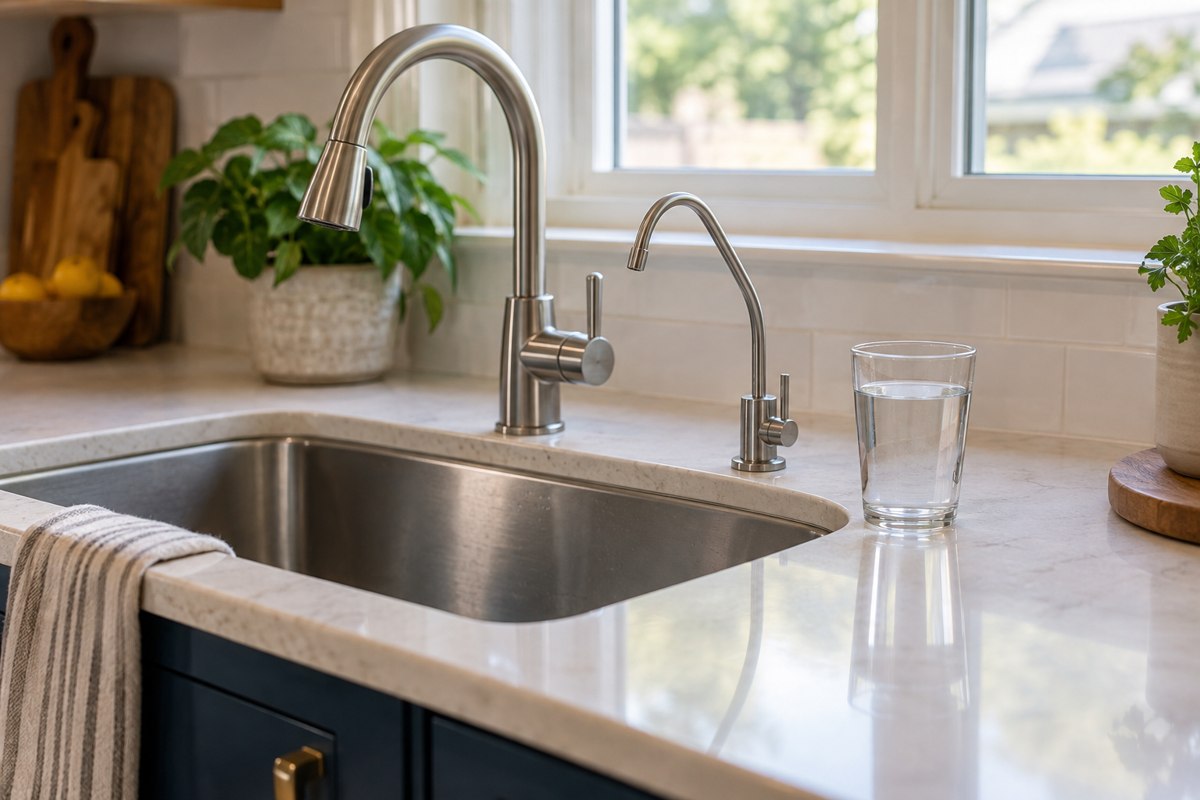
A dedicated drinking-water system focuses on the water used for drinking and cooking. Under-sink reverse osmosis is one option. It uses a membrane and produces both treated water and a reject-water stream, so water use and maintenance are part of the discussion. EPA explains point-of-use RO.
If that system serves only a separate kitchen faucet, it won’t change the water reaching your shower or washing machine. Knowing where the treated water goes is just as useful as knowing what the equipment is called.
Sometimes a combination fits
Someone who wants hardness reduction around the house and a separate drinking-water option may have two different goals. We’ll talk through whether a combination makes sense, rather than assuming one box has to do every job.
We also explain the upkeep for each stage. A proposal should make the complete setup understandable, including what needs attention after installation.
Start with what you want to change
Tell us where you notice the issue and how your home uses water. We’ll take that into account alongside the test results and plumbing before recommending equipment.
Renting? Ask about countertop or standing reverse-osmosis options. Renter inquiries receive follow-up about those options and aren’t booked as free in-home homeowner test appointments.